
Dear men,
Be careful how you see.
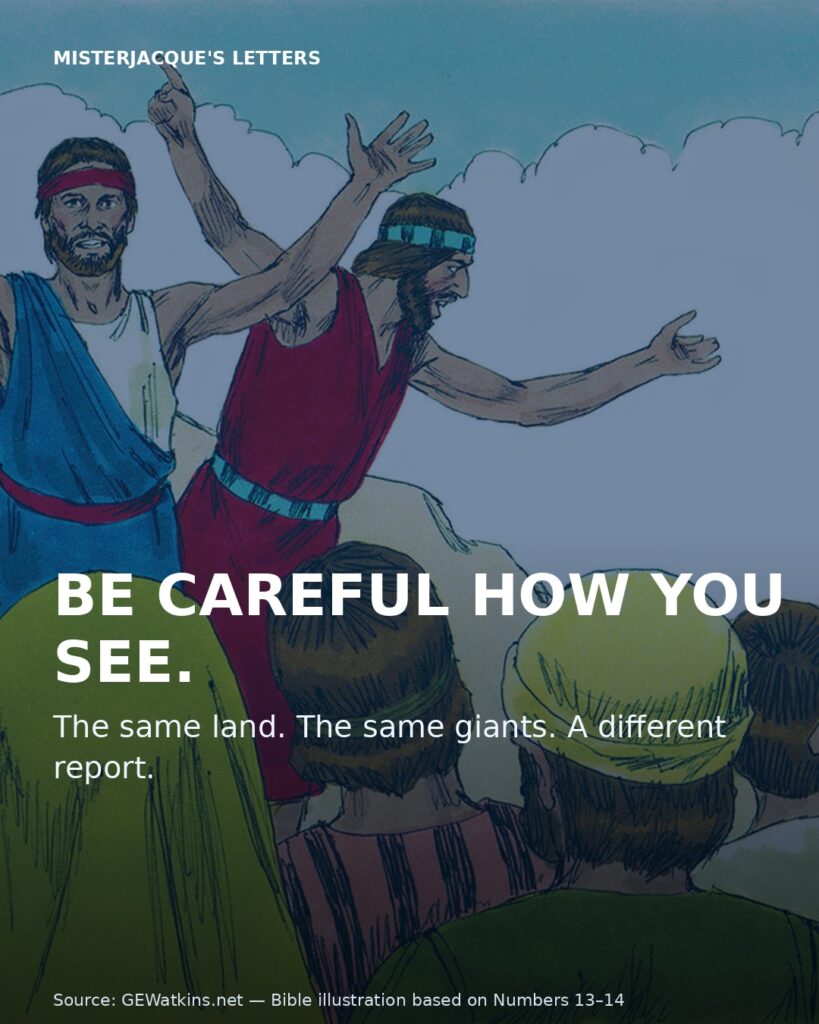
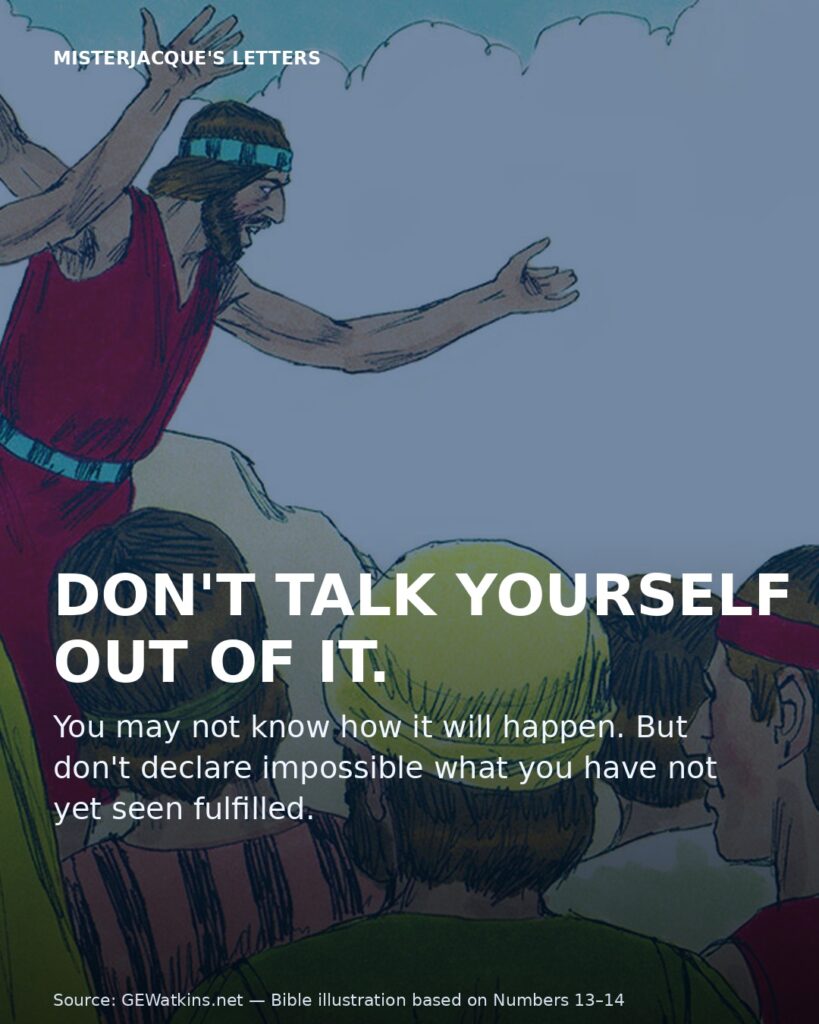
The story of the ten spies Moses sent to explore the land of Canaan is a familiar one. Ten men went to see the land God had promised them, but they returned with two very different reports.
Joshua and Caleb came back with a report filled with hope and possibility. The other eight saw the same land, the same giants and the same challenges, but they saw themselves as grasshoppers in their own eyes—and eventually, that was how they imagined the inhabitants of the land saw them too.
What is less often discussed is what happened afterwards: those eight men never entered the Promised Land.
Isn’t this theme familiar?
Remember the officer who doubted Elisha’s prophecy during a time of severe famine. Elisha declared that within twenty-four hours, food would become so abundant that its price would dramatically fall. The officer couldn’t believe it. He asked, essentially, how such a thing could possibly happen.
Elisha told him that he would see it with his eyes, but he would not eat of it.
And that is exactly what happened.
Be careful how you see. It can be a matter of life and death.
The smallest part you may have to play in the fulfilment of your glorious future—or a promise God has made concerning your life—is to refuse to declare it impossible.
You don’t have to know how it will happen.
You don’t have to understand every detail of the process.
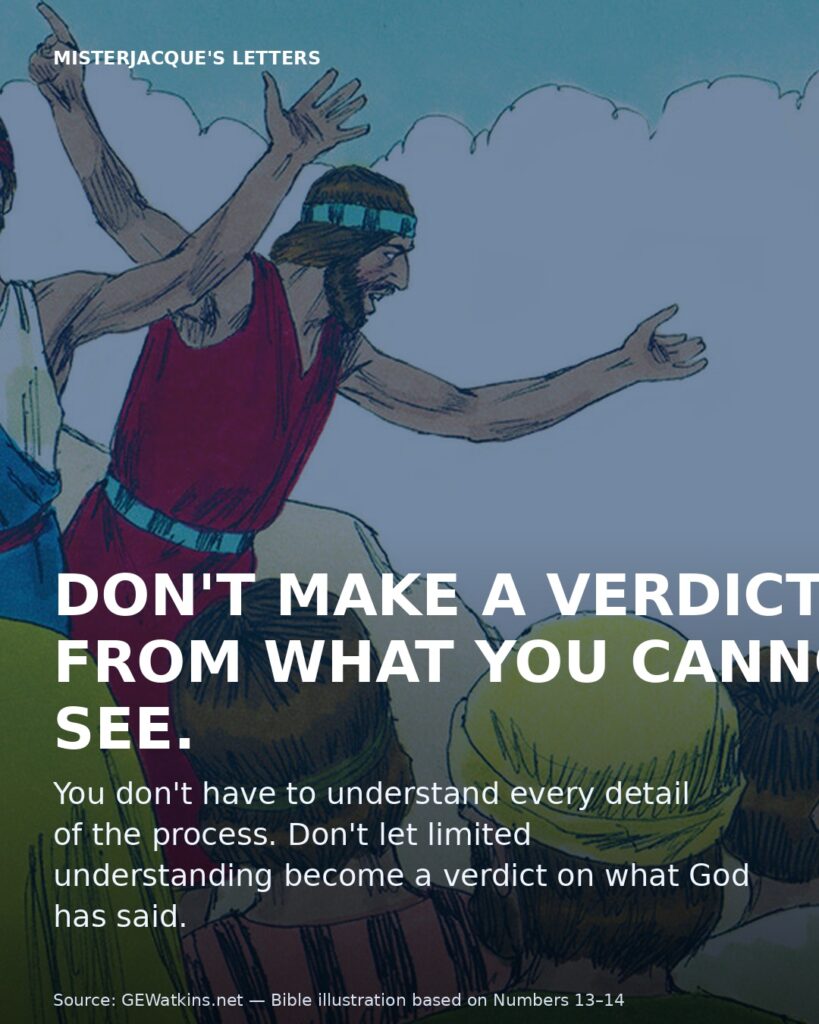
But be careful not to allow your limited understanding to become a verdict on what God has said.
Because once you convince yourself that something cannot be done, that belief rarely stays in your head. It begins to affect how you talk, how you walk, how you work and, ultimately, how you pursue the very thing you were meant to become.
This is why you must be careful how you see.
Don’t mock what you don’t yet understand. Don’t behave as though God never said anything simply because you cannot see how it will happen.
You may not know how.
But you don’t need to know how to believe that God can.
Your responsibility is not to figure out every detail before you move. Sometimes, your responsibility is simply to keep moving in the direction of what you believe God has said.
Don’t be so careful with your faith that you talk yourself out of what God has promised.
The giants may be real. The obstacles may be significant. The process may make little sense to you.
But your inability to see the path does not mean there is no path.
So, be careful how you see.
What you see will influence what you say. What you say will influence how you act. And how you act may determine whether you ever pursue the very thing you once believed was possible.
It can be a matter of life and death.
I’ll definitely write you next week. Until then, keep these thoughts close to your heart.
JACK, Sogbeye
God’s man